

By TIM ROWDEN
The Grief Project
Suicide is a leading cause of death in the United States, with 47,646 deaths reported in 2021, an increase of nearly four percent over 2020, according to recent report from the Centers for Disease Control and Prevention. The rate of suicides per 100,000 increased from 13.5 in 2020 to 14.0 in 2021.
According to the report:
• The number of suicides was higher in nine months during 2021 compared to 2020, with the largest increase occurring in October (+11%).
• The increase in suicides was higher among males (4%) than females (2%), as was the increase in the suicide rate (+3% for males and +2% for females).
• The largest increase in the rate of suicide occurred among males ages 15-24 – an eight percent increase. Suicide rates also increased for males ages 25-34, 35-44, and 65-74.
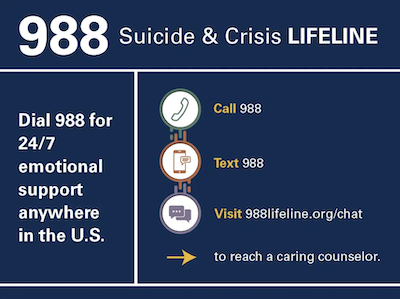 The increase could be fueled in part by the loss, isolation and life disruption of the Covid-19 pandemic, but Kristen Ernst MA, LPC owner of the Center for Hope and Healing, LLC, in St. Charles, Mo., says there are also other factors at play.
Alcohol sales increased by 85 percent during the pandemic, she notes. More people were self-medicating with substances, and suicide rates increased.
Isolation, substance abuse and mental illness all play a role, she said.
“We say that through social media, we’re more connected than ever before, but we’re actually more isolated,” Ernst said. “I think that we all kind of fell victim to the pandemic in some way. And some more than others. And that’s because we’re really not meant to be that isolated. You look at every other mammal, they have communities. If an elephant falls into the river, every other elephant goes into the river to save the little baby elephant.
“During the pandemic, we weren’t able to help each other,” she said. “Even now we’re seeing third graders who don’t know how to read because they were not in school. We learn by being with other people.
“I think the people that weren’t struggling with mental illness before they went into the pandemic really experienced a lot of depression and anxiety. And then for people that were experiencing before, it just increased so much.”
The largest increase in the rate of suicide occurred among males ages 15-24. At that age, Ernst notes, the prefrontal cortex, the part of the brain that moderates cognitive function and impulse control, is not fully developed.
In that age range, “impulsivity is super high,” she said. “And when you add that with mental illness, it’s just a recipe for disaster.”
 The Grief Project